
RESOURCES
Math Medic
These resources from Math Medic are designed to save you time while sparking your students’ curiosity.

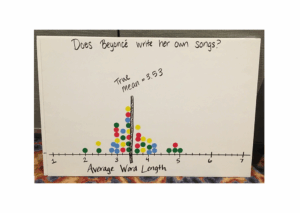
What Does This Dot Represent?
In this blog post, we reveal the ultimate solution to helping students understand inference – a simple question that the teacher can ask.
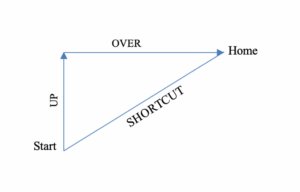
Experience First, Formalize Later (EFFL) for the Pythagorean Theorem
In these lessons, students will discover the Pythagorean Theorem through the Experience First, Formalize Later (EFFL) teaching philosophy.
Why Bother with z-scores and Table A?
We use z-scores and Table A to help us find area under normal distributions (P-value) so that we can make a conclusion to a significance…
SRS, Stratified, Cluster and Now…Systematic by Taylor Swift
Do we need to teach systematic random sampling? According to the new College Board CED, the answer is YES! Check out our new lesson.
A Detailed Analysis of the Questions Used on the AP Statistics Exam
What type of multiple choice and free response questions can we expect to see?
Homework Is Broken. Here’s How We Can Fix It.
Karen Sleno explains how she’s totally changed her approach to homework this year.

EFFL on a Budget!
Giving students an experience before formalizing the learning often requires costly materials. Check out our tips for doing it on a budget.

Staying Out of the Gray Zone
Karen Sleno shares her biggest take-aways from the 2023 AP Calculus Reading.
The Math Medic Desmos Collection
Here you will get a collection of Desmos activities that can be used to enhance your AP Stats instruction and improve student understanding.
New Applets for Teaching Inference
Using simulation can help students to better understand inference. These applets can help!